

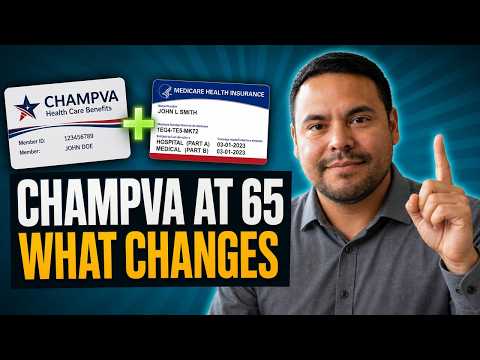
Watch the video explanation below:
Introduction
If you have CHAMPVA and are approaching your 65th birthday, the short video explanation above is critically important because turning 65 changes how CHAMPVA and Medicare work together. Many beneficiaries are surprised by how much enrolling in Medicare at 65 can improve their coverage and reduce out-of-pocket costs.
This article expands on that video and walks you through practical steps, timelines, and choices so you can make an informed decision as you transition to Medicare. The guidance is written for residents across the Rio Grande Valley — including Brownsville, Harlingen, McAllen, Weslaco, and nearby South Texas communities.
What is CHAMPVA and how it coordinates with Medicare
CHAMPVA (Civilian Health and Medical Program of the Department of Veterans Affairs) provides health benefits to eligible dependents and survivors of certain veterans. It covers many medical services, including inpatient and outpatient care, but its role changes once a beneficiary becomes Medicare-eligible at age 65.
When you become eligible for Medicare due to age, Medicare generally becomes the primary payer for Medicare-covered services and CHAMPVA becomes secondary. That means Medicare pays first, and CHAMPVA may cover remaining eligible costs — which can include portions of deductibles and coinsurance for services that Medicare covers.
Why turning 65 is a critical moment
Turning 65 triggers your Medicare Initial Enrollment Period (IEP): the three months before you turn 65, the month of your birthday, and the three months after. Missing this window for Part B (medical insurance) can result in late-enrollment penalties and gaps in coverage that last for as long as you remain unenrolled.
Because CHAMPVA is not the same as employer group coverage, it generally cannot be used to delay Medicare Part B enrollment without potential penalties. Most beneficiaries who keep CHAMPVA should strongly consider enrolling in Original Medicare (Part A and Part B) at age 65 so CHAMPVA can act as secondary coverage, helping to lower out-of-pocket expenses.
The opportunity most beneficiaries never hear about
The biggest opportunity people miss is failing to enroll in Medicare at 65 because they assume CHAMPVA alone is enough. In reality, enrolling in Original Medicare allows CHAMPVA to pick up many of the costs Medicare does not cover, creating a powerful coordination that reduces your financial exposure.
For example, a beneficiary in McAllen who signs up for Part A (usually premium-free) and Part B will have Medicare pay first on a hospital or physician claim, and CHAMPVA may cover the Medicare coinsurance and deductible for that service. That combination often results in far lower out-of-pocket costs than relying on CHAMPVA alone or delaying Medicare enrollment.
Key choices you’ll face at 65
1) Enroll in Original Medicare (Parts A & B)
Enrolling in Parts A and B is usually the simplest path. Part A often comes without a premium if you have sufficient work credits, while Part B has a monthly premium. Medicare will become primary, and CHAMPVA will serve as secondary for Medicare-covered services — which frequently reduces your share of cost.
If you need help with enrollment or want to confirm your eligibility, see this guide on How to Apply for Medicare. Starting enrollment on time helps you avoid potential penalties and coverage gaps.
2) Consider Medicare Part D for prescriptions
Prescription coverage is another critical decision. CHAMPVA provides a pharmacy benefit, but when you become Medicare-eligible you should compare CHAMPVA’s drug coverage to a Medicare Part D plan. In many cases, enrolling in Part D protects you from future late-enrollment penalties and ensures better coordination for medications.
Research Part D options and formularies carefully so your essential prescriptions remain covered. For plan details and comparisons, review our Prescription Drug Plans resource.
3) Medicare Advantage vs. Medigap
If you prefer to leave Original Medicare, you might consider a Medicare Advantage (Part C) plan. Medicare Advantage often combines medical and drug coverage with lower premiums, but it can change how CHAMPVA coordinates benefits. Some CHAMPVA beneficiaries find Medicare Advantage disrupts the secondary payment relationship and prefer Original Medicare plus CHAMPVA.
Alternatively, a Medicare Supplement (Medigap) policy can fill the gaps left by Original Medicare. If you buy Medigap, you’ll pay an extra premium but gain predictable coverage for deductibles and coinsurance. To learn more about these options, see our pages on Medicare Supplement Insurance and Medicare Advantage Plans.
Practical examples from the Rio Grande Valley
Imagine Maria, a former caregiver in Harlingen turning 65. She originally relied only on CHAMPVA and delayed Medicare, thinking she didn’t need it. After learning how coordination works, Maria enrolled in Part A and Part B during her IEP. Medicare paid first on a surgery claim, and CHAMPVA paid the remaining coinsurance — saving Maria thousands out-of-pocket.
Or consider Jorge in Weslaco who enrolled in Part D when he turned 65 because his regular prescription list wasn’t fully covered by CHAMPVA’s pharmacy rules. The Part D plan limited his risk of a coverage gap and protected him from penalties if he needed to change plans later. Local provider networks and pharmacies in places like McAllen can also affect your choice, so review plans available in your city: Medicare Plans in McAllen, TX.
Step-by-step checklist to manage the transition
- Mark your Initial Enrollment Period and apply early for Part A and Part B if needed.
- Confirm whether Part A is premium-free for you — most people qualify through work credits.
- Enroll in a Part D prescription plan if your medications require it.
- Compare Original Medicare + CHAMPVA and Medigap vs. Medicare Advantage options for cost and network preferences.
- Contact CHAMPVA and keep documentation showing Medicare enrollment so claims coordinate correctly.
- Keep copies of Medicare and CHAMPVA ID cards, and inform your providers which insurances to bill first.
These practical steps reduce the chance of billing surprises and ensure CHAMPVA functions as a secondary payer as intended.
How to evaluate your best financial strategy
Deciding between Medigap, Medicare Advantage, or Original Medicare with CHAMPVA depends on your health needs, prescription drugs, provider preferences, and budget. Medigap can make costs predictable, while Medicare Advantage may offer lower monthly premiums but more restricted networks.
Run scenarios: estimate annual total costs (premiums + estimated out-of-pocket) for each option and include CHAMPVA coordination in the math. If you regularly use specialty care in the Rio Grande Valley, check local provider acceptance in Brownsville and surrounding towns before selecting a Medicare Advantage plan — network access matters.
Frequently Asked Questions
1. Do I have to sign up for Medicare if I already have CHAMPVA?
Most people who are eligible for Medicare at 65 should sign up for Part A and Part B because Medicare becomes primary and CHAMPVA secondary. Enrolling prevents potential late-enrollment penalties and often results in lower out-of-pocket costs due to coordination of benefits.
2. Will CHAMPVA pay my Medicare Part B premium?
No — CHAMPVA does not pay Medicare Part B premiums. You are responsible for paying the Part B premium when you enroll. CHAMPVA may cover coinsurance and deductibles for Medicare-covered services, but it will not cover your Part B premium costs.
3. Can I keep CHAMPVA if I join a Medicare Advantage plan?
CHAMPVA remains an entitlement for eligible beneficiaries, but coordination with Medicare Advantage plans can be different than with Original Medicare. Because Medicare Advantage is delivered through private plans, CHAMPVA’s role as secondary payer can change; consult a broker or CHAMPVA customer service before enrolling in Part C.
4. Should I enroll in a Medicare Part D plan if I have CHAMPVA?
Yes — enrolling in Part D is strongly recommended. Prescription coverage under Medicare is complex, and enrolling in Part D protects you from late enrollment penalties while ensuring smoother coordination for medications you take regularly.
5. Where can I get help tailored to the Rio Grande Valley?
If you live in Brownsville, Harlingen, McAllen, Weslaco, or nearby South Texas communities, a local independent broker can review plan options and network availability specific to your area. Local experience helps identify Medicare and CHAMPVA combinations that work well for Valley residents.
Conclusion
Turning 65 while on CHAMPVA is a major milestone that deserves careful planning. The most important takeaway: don’t assume CHAMPVA alone is sufficient — enrolling in Medicare (especially Part B and Part D) often reduces risk and out-of-pocket costs because CHAMPVA can act as valuable secondary coverage.
If you live in the Rio Grande Valley and want a clear, personalized plan — including whether Original Medicare + CHAMPVA, Medigap, or Medicare Advantage is best for you — reach out for local guidance tailored to your situation.
For step-by-step help and to review your Medicare choices, contact Antonio Espino from Espino Insurance Group. Call or text: 956-455-1313. Visit: https://antonioespinoinsurance.com for more resources and to schedule a consultation.
Ready to Get Help with Your Medicare Options?
Antonio Espino from Espino Insurance Group is an independent Medicare and insurance broker serving the entire Rio Grande Valley — including Brownsville, Harlingen, McAllen, and surrounding South Texas communities.
📞 Call or text: 956-455-1313
🌐 Visit: antonioespinoinsurance.com